Case study: Helping organisations build their career frameworks
I led a transformative product and service development initiative at Progression to help organisations build out their career frameworks more effectively, in turn driving our MRR, retention and operational efficiency.
Problem: Framework implementation was a barrier to value
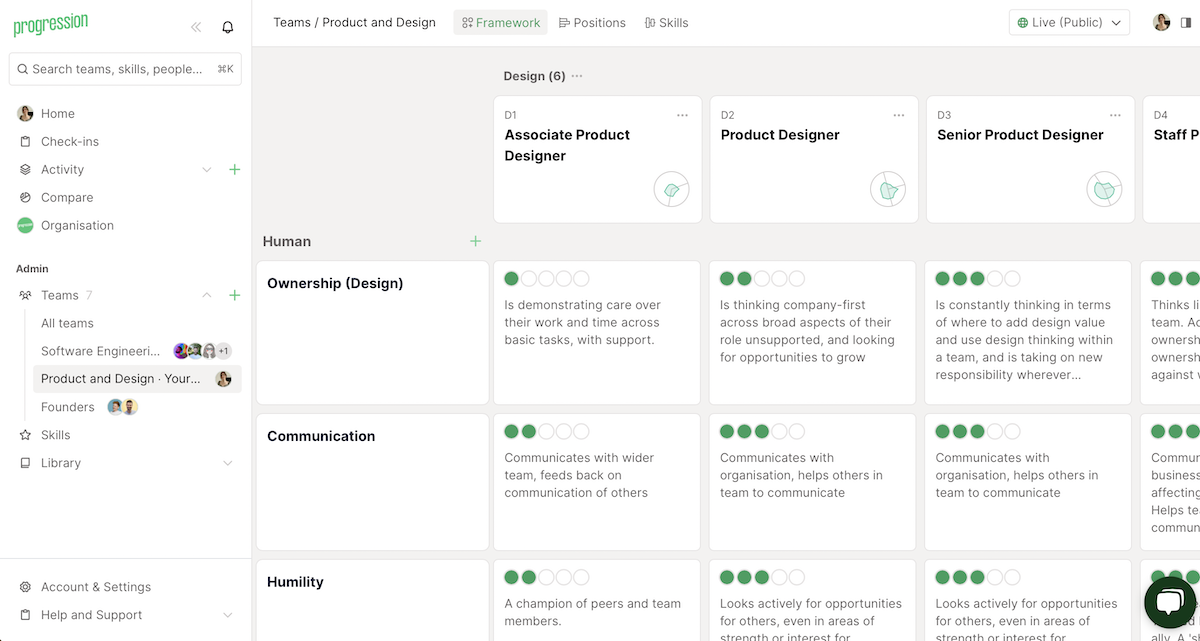
Organisations came to Progression because they wanted to implement a fair, transparent approach to career development. However, building out their career development ladders was a huge undertaking involving multiple stakeholders, with the need to create and approve a lot of content and to manage a successful and engaging rollout to their employees.
Our product offered the structure to host, share and leverage career frameworks, but we were not doing enough to guide customers towards getting their framework completed and rolled out. Many customers took their build offline, stalled on content creation, and never got to the point where teams could benefit from it.
Since customers only began paying for seat subscriptions once the framework was complete, it was critical to our MRR growth that we brought down time to launch from several months to as quickly as possible from initial signup, without a large headcount supporting in CX. It was equally important to be able to prove out our ROI by making sure frameworks were high-quality and likely to be adopted and used by employees, improving org retention.
Hypothesis and needs
In order to coach customers to launch their frameworks, we needed to understand their methods of working both on and off the Progression platform.
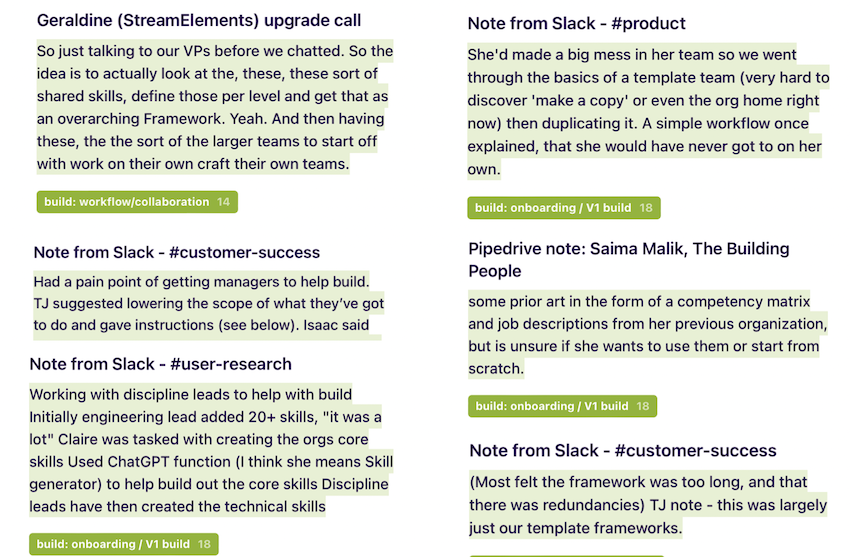
I led on conducting user research to understand the stakeholders involved in the entire process and where our product was not meeting their needs.
Some of the many user research outcomes
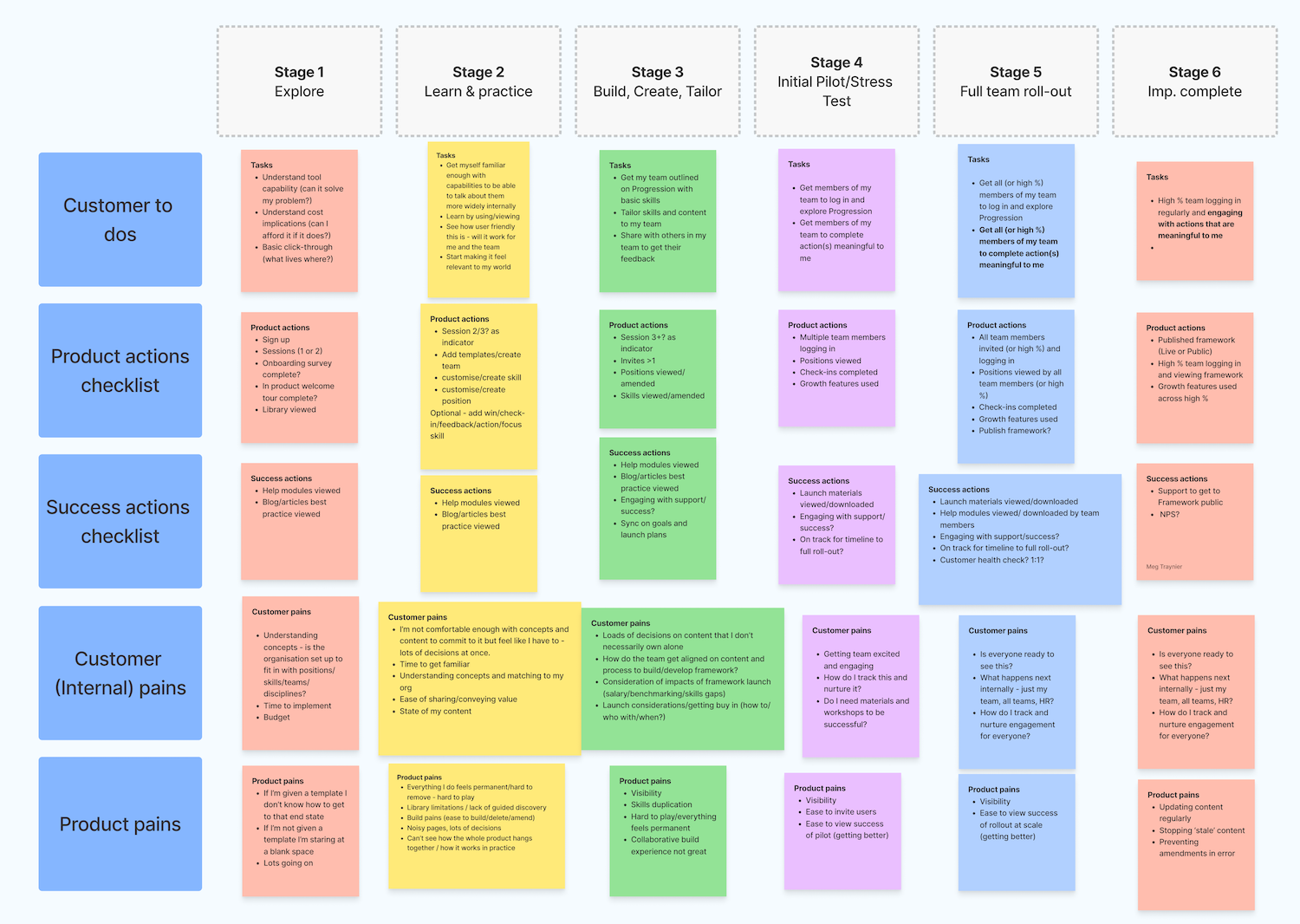
From this research, I supported the teams to map out the rollout experience as a user journey map complete with their goals, pain points and on/off product activity at each stage.
User journey map
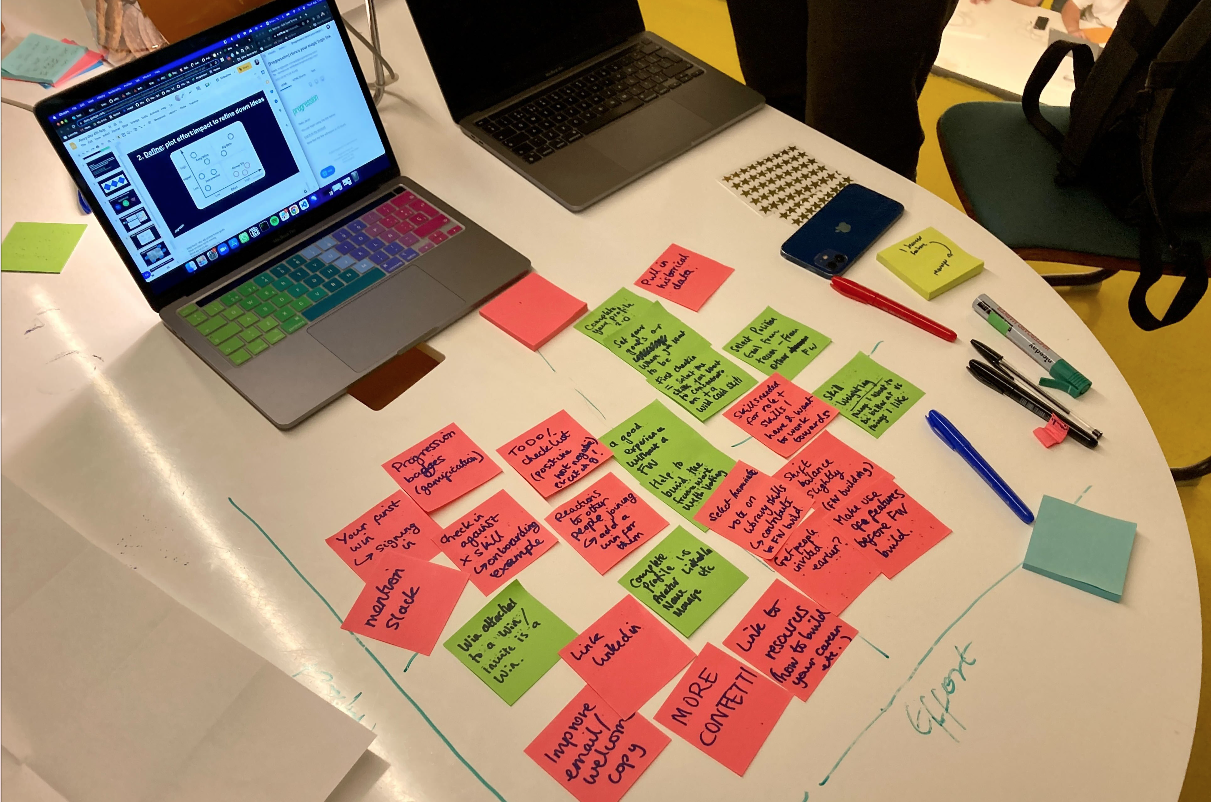
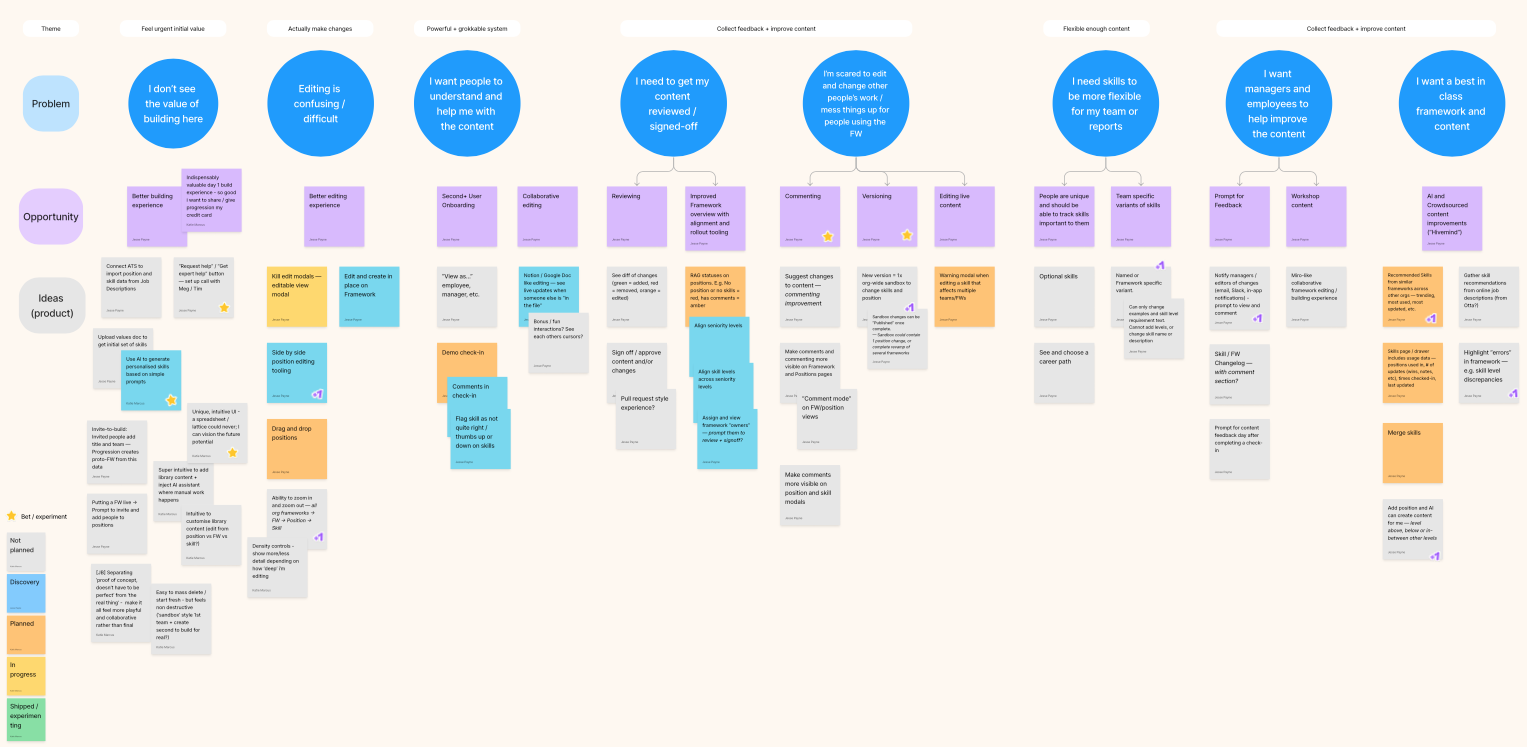
I supported the team to ideate and prioritise opportunities based on effort-to-impact and laddering them into the outcome they expected them to drive.
Ideation sessionOpportunity-solution tree
And to set meaningful usage, impact and health measures, which were:
Build and collaboration activity per user
Time to launch reduction
Engagement and retention
Qualitative feedback on experience quality
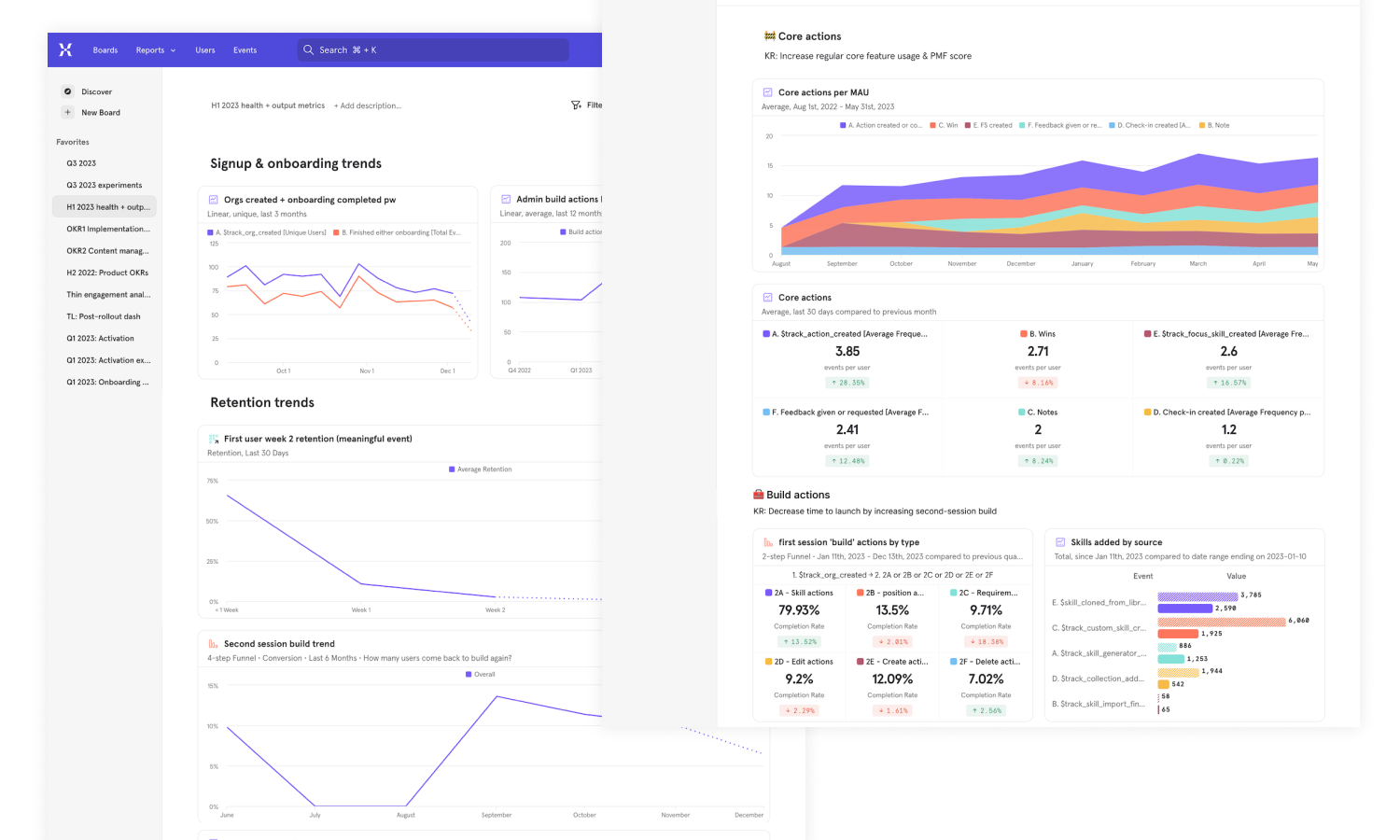
Baseline dashboard
The key outcomes from this discovery phase were that we had opportunities in:
General cognition of the platform and its component parts - frameworks, skills, positions, requirements.
Collaboration functionality within the platform to manage smooth writing, editing and feedback amongst multiple content creators.
Guidance on what ‘good’ looks like for orgs who had a blank slate, as well as supporting orgs who already have content and wish to import and share it across their functions.
A blend of hand-held and product-enabled launch advice, including a clear and engaging employee onboarding experience to guarantee a successful rollout.
The solution
In Q2 2023, we delivered a range of iterative, experimental and foundational improvements to the framework creation process to meet these user needs.
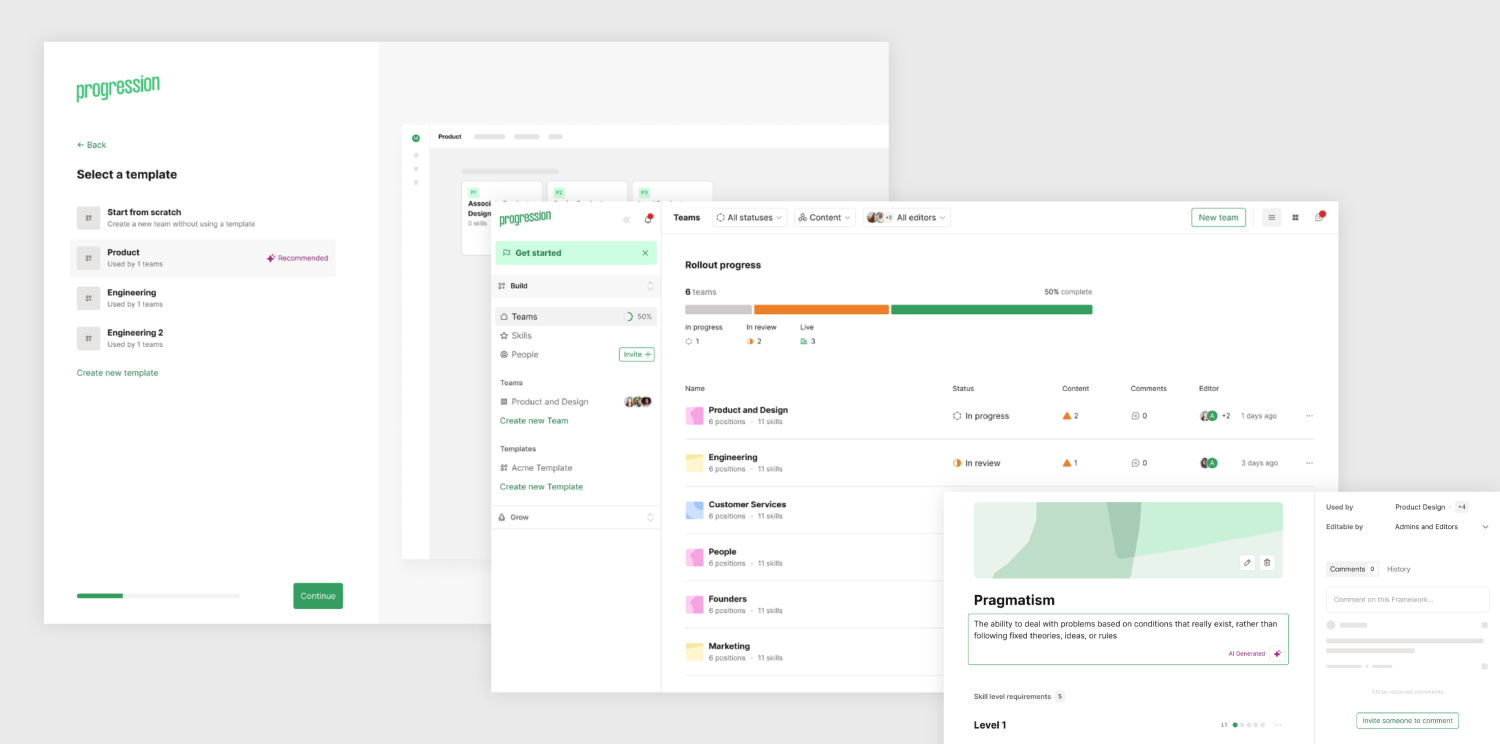
Some features delivered: onboarding wizard, build status hub, AI content generation
Compelling, educational onboarding via a ‘wizard’ type experience, to introduce new admins and editors to the platform capabilities and get them started with a relevant framework.
A centralised build and rollout hub in the app with more granular status tracking to match the way orgs managed their launch.
AI content generation, bulk import tools, and more intuitive editing interfaces and UX to match the ways a range of customer personas wanted to build.
Commenting, notifications and version control functionality on framework content to aid more successful collaborative working patterns.
Collaboration with CX and content marketing to create clear and engaging support documentation, rollout guides, and employee onboarding experiences.
I led on the following areas of work:
Research, opportunity analysis, and scope / prioritisation decisions
Execution and delivery, coachibng and enabling product teams
Metric tracking, analysis and status reporting
Managing rollout: internal training, writing support documentation and hosting user webinars
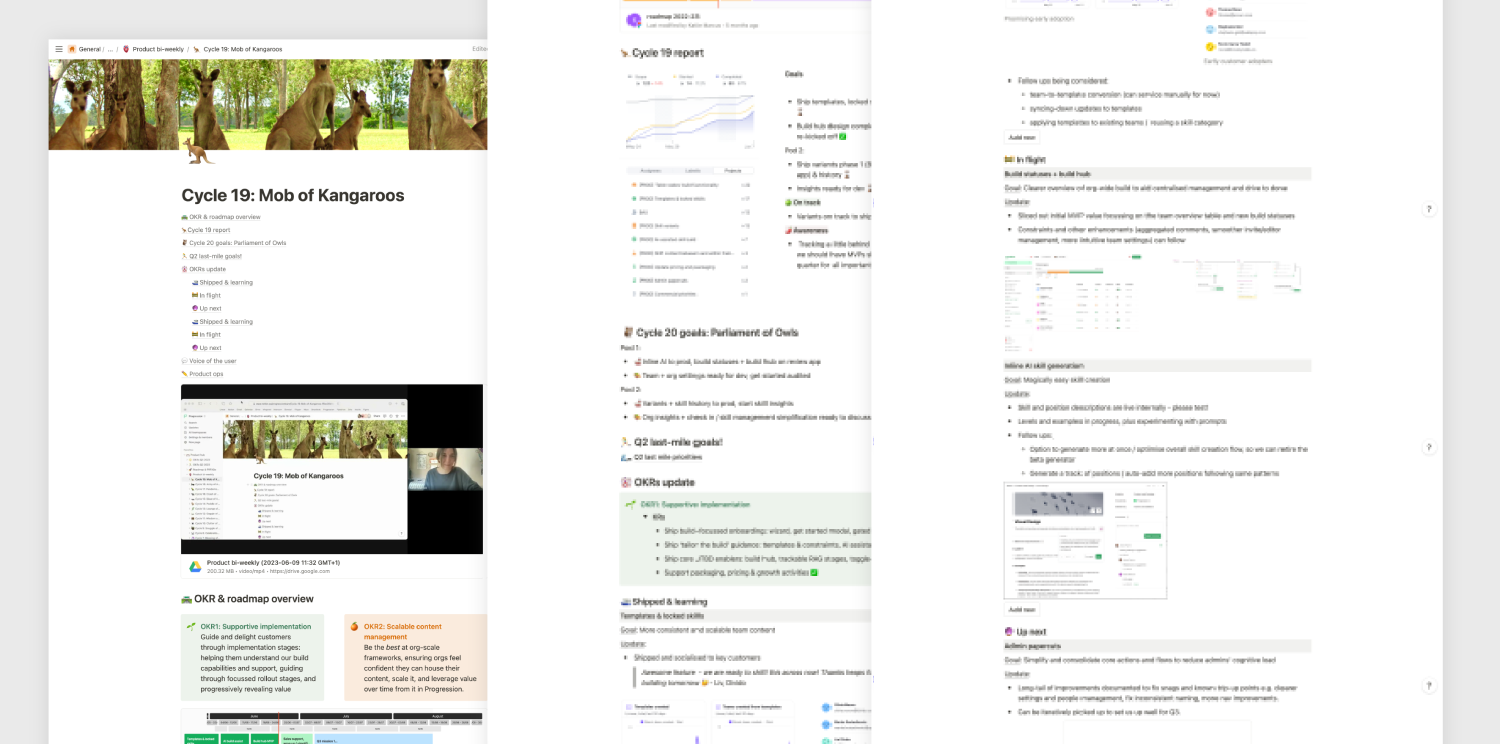
Example product report I ran biweekly including objectives, cycle report, OKR updates, progress sharing and learnings.
We needed to keep a close eye on scope and risk, in particular managing the balance of investment in several technical areas including:
Migration of our platform from Rails to React
Implementation of accurate, performant, ethical AI
Offering a full user-facing experience, vs creation of internal backend tools to help CX self-serve customers
Results and impact
We saw strong adoption of the new tools and content, which overall correlated to a positive uplift in the speed to successful roll out for more new organisations.
Collaboration in the platform skyrocketed and maintained its momentum, with over 80% of admins using comments and notifications in their first 30 days.
300% increase in core build actions amongst new users and a 300% uplift in D14 retention
Strong adoption and positive feedback on onboarding, AI content generation and build hub.
Reduction in average time to launch a team by 30% (3 months to 30 days) contributing to overall MRR goals
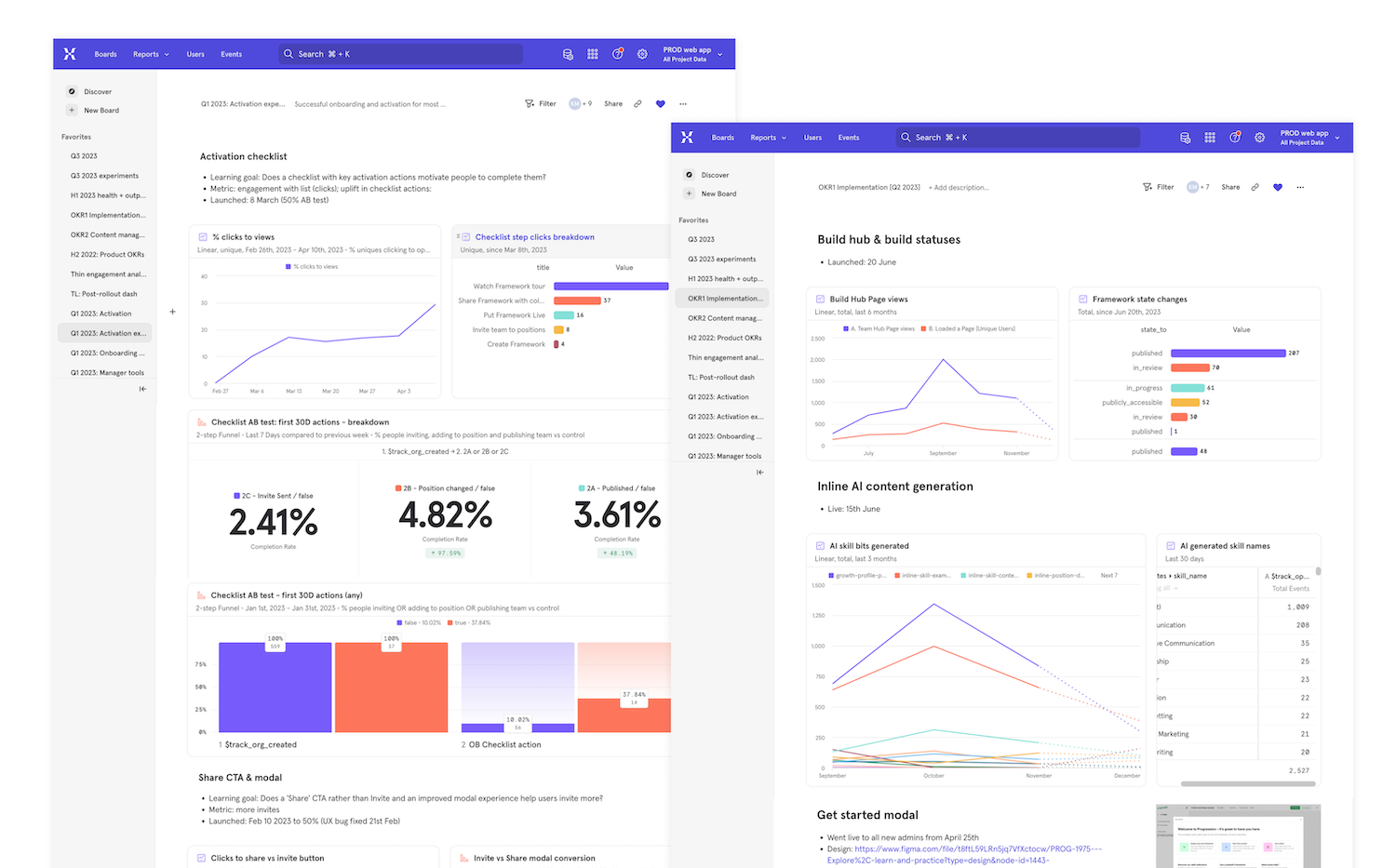
Monitoring and results dashboard
Progression customer: "This is going to be a tremendous boon to (my own) productivity as we roll this out across our teams, particularly since it looks like I can quickly identify comments and content statuses on which to follow-up.”
From this initiative I learned:
The importance of deeply understanding the user's life outside of the product: the constraints, pressures and goals they face which the product needs to fit into. Likewise the impact that service design can have e.g. being judicial in where to offer 'human; support vs productised.
Not overlooking 'obvious' table-stakes type functionality (such as comments), which can be the difference between adoption and rejection.
The impact of AI technology to massive sped up workflows and give users a 'wow' moment - and how we needed to adapt as a team to work with it effectively.